Last Updated: November 27, 2026
Quick Summary
Cannabis may help some people with sleep maintenance insomnia, but the evidence is mixed and the strongest studies are cautious. A 2026 Cochrane review found medical cannabis may have little to no clinically meaningful effect on sleep quality or total sleep time, and THC can reduce REM sleep and push you toward lighter sleep.
- Waking at 3 a.m. is a sleep maintenance problem, not a sleep onset problem, and the two need different approaches.
- A 2023 trial found a THC-and-CBD oral oil raised midnight melatonin levels by 30% versus a 20% decline on placebo.
- Edibles and gummies typically onset in 30 minutes to two hours and last several hours, risking morning grogginess if taken too late.
- Cannabis affects individuals differently. Consult a healthcare professional about potential risks, timing, and interactions before using cannabis for sleep concerns.
- If several weeks of use do not improve wake-after-sleep-onset or daytime function, reassess rather than escalating dose.
Table of Contents
- Why Waking at 3 A.M. Is a Different Problem Than Falling Asleep
- What Research Says About Cannabis for Insomnia
- Cannabis and REM Sleep: What Changes in Sleep Architecture
- THC, CBD, and Sleep Edibles Gummies: What Labels Tell You
- Cannabis for Sleep Risks: Tolerance, Withdrawal, and Next-Day Effects
- How to Track Whether Cannabis Is Actually Helping You Stay Asleep
- Shopping for Sleep Products at Kind Meds in Denver and Colorado Springs
- Frequently Asked Questions
Why Waking at 3 A.M. Is a Different Problem Than Falling Asleep
Waking at 3 a.m. is not the same problem as struggling to fall asleep, and treating them the same is why so many people get poor results from cannabis for sleep maintenance insomnia. Falling asleep is about sleep onset.
That matters for anyone reaching for a gummy at bedtime. A product that helps you drift off may do nothing for the 3 a.m. wake-up, and may even work against you if it wears off mid-night. Understanding this distinction is important when discussing sleep concerns with a healthcare professional.
Below, we break down what the research actually shows, what labels really tell you, and how to track whether cannabis is helping you stay asleep or just helping you fall asleep.
What Research Says About Cannabis for Insomnia
The evidence on cannabis for insomnia is mixed, and the strongest studies are cautious. A 2026 Cochrane review found that medical cannabis may have little to no clinically meaningful effect on sleep quality, total sleep time, or daytime outcomes, according to the Cochrane review of medical cannabis for insomnia.
Some findings are more encouraging. A randomized, double-blind, placebo-controlled crossover trial published in the Journal of Sleep Research in 2023 found that a THC-and-CBD oral oil improved sleep and raised midnight melatonin levels by 30% in the active group, versus a 20% decline on placebo. That is a real signal, but it measures melatonin, not whether people stayed asleep.
Where the Evidence Is Strongest and Weakest
If you want a deeper look at full-spectrum options, see our guide to RSO, FECO, and sleep.
Cannabis and REM Sleep: What Changes in Sleep Architecture
Cannabis changes sleep architecture, and not always for the better. THC tends to reduce REM sleep, the stage tied to dreaming and memory processing, and can increase time in lighter sleep. That can make sleep feel less restorative even when total hours look fine.
A 2026 review in Springer’s sleep medicine coverage notes that a large meta-analysis of recreational cannabis use found links to poorer subjective sleep quality and altered sleep duration. Those are associations, not proof of cause.
The practical takeaway: if you wake at 3 a.m. and feel groggy rather than rested, the issue may be sleep quality, not sleep quantity. Cannabis can shift you toward lighter sleep, which is the opposite of what sleep-maintenance insomnia needs.
THC, CBD, and Sleep Edibles Gummies: What Labels Tell You
Labels on sleep edibles gummies rarely tell you enough to dose precisely, and that is the core problem for sleep-maintenance insomnia. THC drives most of the sedative effect, while CBD is often marketed for calm without strong evidence it fixes nighttime awakenings.
That variability matters for maintenance. A product that kicks in after you are already asleep can leave you foggy at 6 a.m. A product that wears off at 2 a.m. can trigger the very wake-up you are trying to avoid. Matching onset and duration to your pattern, trouble staying asleep versus early waking, is more useful than chasing a higher milligram number.
How to Read a Cannabis Label
Most regulated packages carry the same core fields. Read them in this order:
- Total THC per serving, not per package. A package may list 100 mg total THC across 10 pieces; the per-serving number is what matters for dosing.
- Serving size and servings per container. Confirm whether one piece equals one serving or whether the package expects you to split it.
- THC versus CBD ratio. A 1:1 product behaves differently from a high-THC product; note the ratio, not just the total.
- Batch testing and potency details. Look for a batch or lot number and a potency result; this is how you verify what you bought.
- Ingredients and formulation. Oral oils, tinctures, capsules, and gummies absorb at different rates, so onset and duration differ by format.
- Manufacture or expiration date. Older product can lose potency, which adds another variable to your tracking.
Route of Administration and Timing
Format changes the timing curve more than most people expect:
- Edibles and gummies typically onset in 30 minutes to two hours and last several hours, useful for staying asleep, risky for morning grogginess if taken too late.
- Oral oils and tinctures can onset similarly but are easier to split into small, repeatable doses.
- Inhaled flower or cartridges onset within minutes but fade faster, which can mean a mid-night re-dose and a rebound wake-up.
- Concentrates and rosin are potent and fast-acting; small, measured amounts matter more, not less.
A common pattern is to take a low dose 60 to 90 minutes before bed when the goal is maintenance, then log the result rather than adjusting nightly.
Watch out: doubling a dose because the first night did not work usually extends impairment into the morning rather than fixing the wake-up, change one variable at a time and give it several nights.
For strain-specific picks, our guide to the best cannabis strains for sleep quality breaks down what tends to work. You can also browse our full edibles selection to compare formats.
Format changes the timing curve more than most people expect, so match onset and duration to your wake-up pattern.
| Format | Onset | Duration | Note |
|---|---|---|---|
| Edibles and gummies | 30 minutes to two hours | Several hours | Useful for staying asleep; risky for morning grogginess if taken too late |
| Oral oils and tinctures | Similar to edibles | Similar to edibles | Easier to split into small, repeatable doses |
| Inhaled flower or cartridges | Within minutes | Fades faster | Can mean a mid-night re-dose and rebound wake-up |
| Concentrates and rosin | Fast-acting | Potent | Small, measured amounts matter more, not less |
Cannabis for Sleep Risks: Tolerance, Withdrawal, and Next-Day Effects
Cannabis for sleep risks are real, and they compound with regular use. Tolerance builds, so the same dose stops working. Dependence can follow, and withdrawal itself disrupts sleep, creating rebound insomnia when you stop. Next-day effects are the other cost: THC can leave you groggy, slow reaction time, and worsen daytime functioning, which defeats the purpose of better sleep. A Sleep Foundation survey found cannabis use for sleep is common, but common is not the same as safe or effective.
Watch out: using cannabis every night to force sleep can quietly turn a wake-up problem into a dependence problem. If you need more to get the same effect, that is a signal to reassess, not to increase the dose.
Interactions and Additive Sedation
Cannabis does not act in isolation. THC and CBD can add to the sedating effects of alcohol, sleep medicines, anxiety medicines, opioids, and some over-the-counter sleep aids. Combining them raises the risk of oversedation, impaired coordination, and next-day drowsiness. CBD can also interact with how the body processes certain prescription drugs, so the combination matters as much as the cannabis itself.
A practical safety checklist:
- Disclose cannabis use to your clinician and pharmacist, including how often and in what form.
- Do not combine cannabis with alcohol on nights you are treating sleep.
- Check prescription labels for drowsiness warnings before adding cannabis.
- Avoid driving or operating equipment after use, especially if you feel residual grogginess the next morning.
- Keep products locked away from children and pets; edibles look like candy.
- Stop and seek advice if you experience fainting, chest pain, severe confusion, or a reaction you did not expect.
A Decision Framework for Whether Cannabis Fits
Cannabis is not the right tool for every sleeper, and the cause of your awakenings should guide the decision. Talk with a clinician before using cannabis for sleep if any of the following apply:
- You are pregnant, breastfeeding, or planning pregnancy.
- You take prescription medicines, especially sedatives, opioids, or blood thinners.
- You have a history of substance use disorder.
- You are younger than the legal age for cannabis purchase in your state.
- Your awakenings come with loud snoring, gasping, or witnessed pauses in breathing, these can signal sleep apnea and need medical evaluation, not a gummy.
- You have heart, lung, or mental health conditions that a clinician should weigh in on.
For many people, the cause of the 3 a.m. wake-up is not a cannabis deficiency. Stress, alcohol, blood sugar swings, room temperature, and untreated sleep disorders all produce maintenance insomnia, and each has its own fix. Cannabis may help some people bridge a rough patch, but it is not a substitute for addressing the underlying driver.
When to Reassess
Set a checkpoint. If you have used cannabis for sleep for several weeks and your wake-after-sleep-onset, total sleep time, or daytime function has not improved, the product is not earning its place in your routine. That is the moment to talk with a clinician about CBT-I, a sleep study, or other first-line options rather than escalating dose.
How to Track Whether Cannabis Is Actually Helping You Stay Asleep
Tracking is the only way to know if cannabis is helping you stay asleep, because feeling better is not the same as sleeping better. A simple sleep diary beats memory every time.
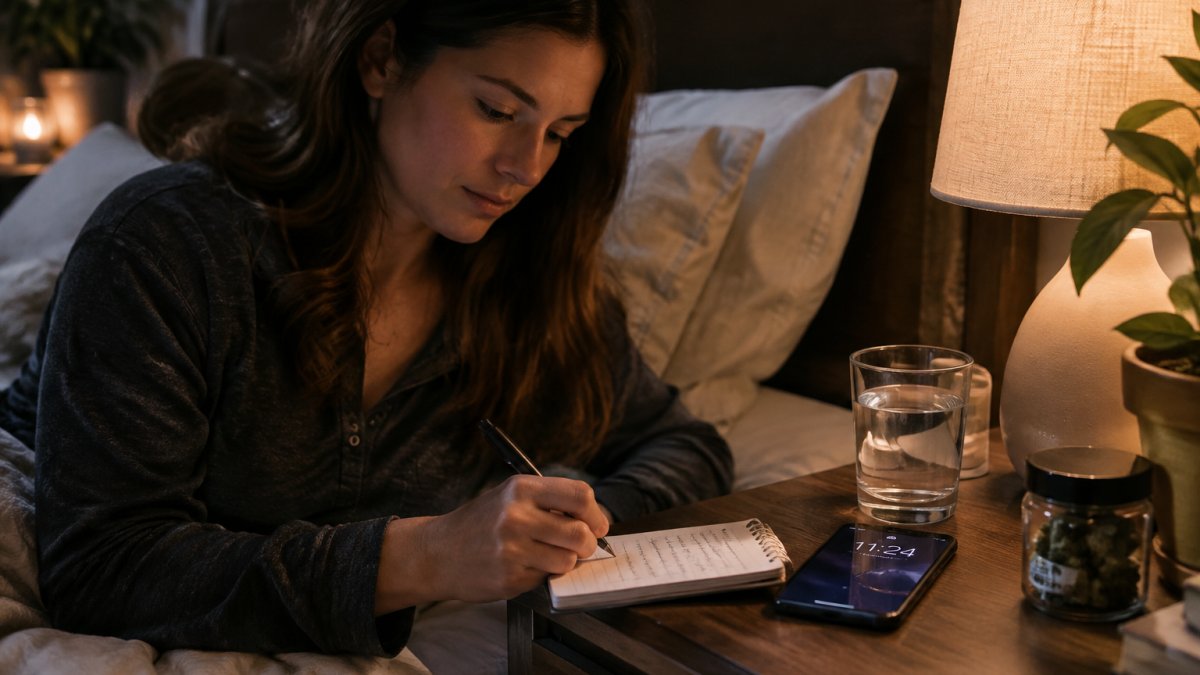
Log these each morning for two weeks:
- Time you went to bed and woke up
- How many times you woke during the night
- Minutes awake after each wake-up
- Whether you used cannabis, what kind, and how much
- How you felt the next day
Compare nights with and without cannabis. If wake-after-sleep-onset and total sleep time do not improve, the product is not working for maintenance. If you are deciding between formats, our comparison of flower versus edibles can help you choose.
Shopping for Sleep Products at Kind Meds in Denver and Colorado Springs
Shopping for sleep products starts with knowing what you want and buying from a source you trust. Kind Meds has served Colorado since 2009 as a vertically integrated dispensary, which means we grow, extract, and sell our own products. Whether you shop medical or recreational, our team can help you find what fits your needs.
Kind Meds Denver
Our Denver shop carries flower, rosin, concentrates, cartridges, and edibles, with online ordering and in-store pickup. Medical and recreational customers are both welcome.
Find store details and hours on our Denver location page.
Kind Meds Colorado Springs
Our Colorado Springs shop offers a curated selection with online ordering and in-store pickup.
SHOP COLORADO SPRINGS – ORDER ONLINE
See our Colorado Springs location page for details. You can also confirm we are the right fit on our dispensary overview page.
Frequently Asked Questions
Can cannabis help with sleep maintenance insomnia?
The evidence is mixed and no study we reviewed isolates sleep maintenance insomnia specifically. Treat cannabis as unproven for nighttime awakenings and track your own results with a sleep diary.
Does cannabis help you stay asleep through the night?
Not reliably. The evidence does not show that cannabis reliably reduces nighttime awakenings. If you wake repeatedly, talk with a clinician before relying on cannabis.
What are the risks of using cannabis for sleep?
Other concerns include next-day impairment, tolerance that pushes dose upward, and withdrawal-related sleep disruption when you stop. Anyone with a history of anxiety, PTSD, or chronic pain should discuss interactions and risk-benefit with a clinician.
Can cannabis affect REM sleep?
THC can be associated with reduced REM sleep during use. Treat this as a general consideration rather than a measured outcome. If dream disruption or grogginess matters to you, start with a low dose, keep a sleep diary, and note whether you feel rested on waking rather than judging by hours in bed alone.