Cannabis terpenes are natural aromatic compounds that help give each strain its distinct smell, flavor, and character. They may also influence how a cannabis experience feels, which is why understanding terpene profiles can be useful when choosing between uplifting, relaxing, or balanced options.
What Are Cannabis Terpenes?
Terpenes are compounds produced by many plants, including cannabis. They create familiar aromas such as citrus, pine, lavender, pepper, and fruit. In cannabis, different combinations of terpenes help create each strain’s unique profile and may contribute to how the overall experience is perceived.
How Terpenes May Influence the Cannabis Expeience
Terpenes do not determine an experience by themselves, but they may help shape how cannabis feels alongside cannabinoids such as THC and CBD. Some terpene profiles are commonly associated with uplifting or energetic experiences, while others are associated with relaxation, calm, or a more balanced effect.
Common Cannabis Terpenes and Their Profiles
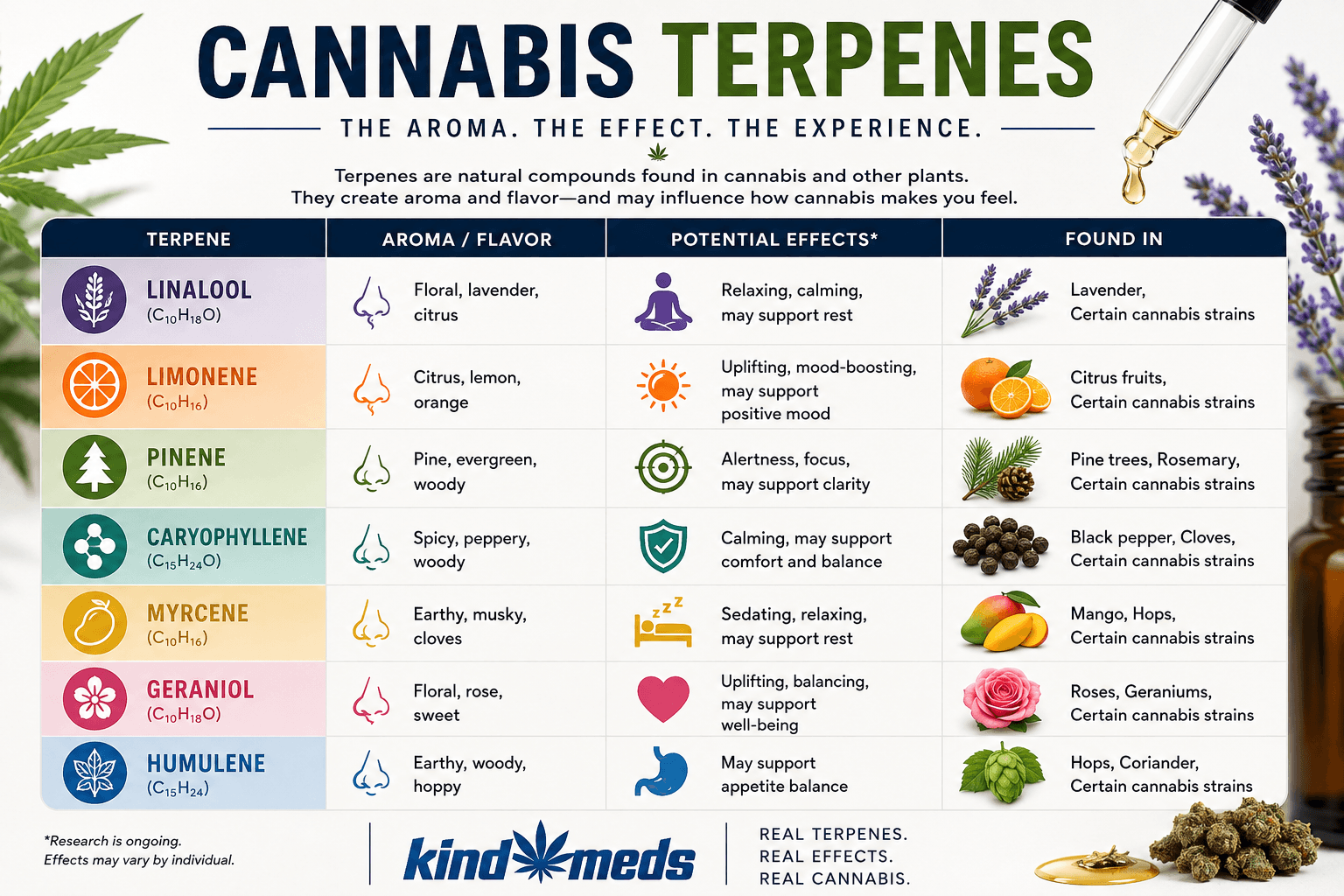
Myrcene — earthy, musky, herbal; commonly associated with relaxing profiles.
Limonene — citrus; commonly associated with uplifting or bright profiles.
Pinene — pine; often associated with clear, fresh profiles.
Linalool — floral, lavender-like; commonly associated with calming profiles.
Caryophyllene — peppery, spicy; often found in balanced or relaxing profiles.
Uplifting, Relaxing, and Balanced Terpene Profiles
Uplifting profiles often feature terpenes like limonene and pinene and are commonly associated with brighter, more energetic experiences.
Relaxing profiles often include myrcene, linalool, or caryophyllene and are commonly associated with calmer, heavier experiences.
Balanced profiles combine multiple terpene types and may feel more even, depending on the cannabinoid content and the individual.
Cannabis-Derived vs. Food-Grade Terpenes
Cannabis-derived terpenes come directly from cannabis plants and can preserve more of a strain’s original aromatic profile.
Food-grade terpenes are usually sourced from other plants such as citrus, herbs, or flowers. Individual terpene molecules can be the same, but the overall blend and aroma profile may differ from cannabis-derived terpenes.
Terpenes vs. Indica, Sativa, and Hybrid Labels
Indica, sativa, and hybrid labels can be useful shorthand, but they do not always predict how a product will feel. Terpene and cannabinoid profiles often give a more detailed picture of the overall experience, especially when comparing strains with similar THC levels.
Why Terpene Profiles Matter When Choosing Cannabis
Looking beyond THC percentage can help consumers compare products more thoughtfully. Aroma, terpene profile, cannabinoid content, and personal preference can all play a role in choosing a cannabis product that better matches the experience someone is looking for.
How to Read a Terpene Profile
A terpene profile usually lists each terpene by percentage or concentration. The most abundant terpenes often have the greatest influence on aroma and flavor. Looking at the top two or three terpenes can give a quick idea of whether a product may lean more uplifting, relaxing, or balanced.
Can Terpenes Change How Cannabis Feels?
Terpenes may contribute to how cannabis feels when combined with cannabinoids such as THC and CBD, but they do not act as a simple on/off switch for a specific effect. Research into these interactions—often called the entourage effect—is still developing, and individual experiences can vary.
Understanding Terpenes Can Help You Choose Cannabis More Confidently
Understanding cannabis terpenes gives consumers another way to compare cannabis beyond THC percentage or simple indica, sativa, and hybrid labels. By looking at dominant terpenes, cannabinoids, aroma, and personal preference together, consumers can make more informed choices about the cannabis experience they are looking for.
Cannabis terpenes can also vary between strains, harvests, and individual products. Checking available lab results and product information can help consumers see which terpenes are most prominent. Over time, paying attention to specific terpene combinations and personal experiences may make it easier to recognize the aromas and profiles you prefer.