How RSO and Distillate Are Made
RSO vs. Distillate: Although RSO and distillate both begin with cannabis, they are manufactured with different objectives, resulting in products with distinct characteristics.
How RSO Is Made
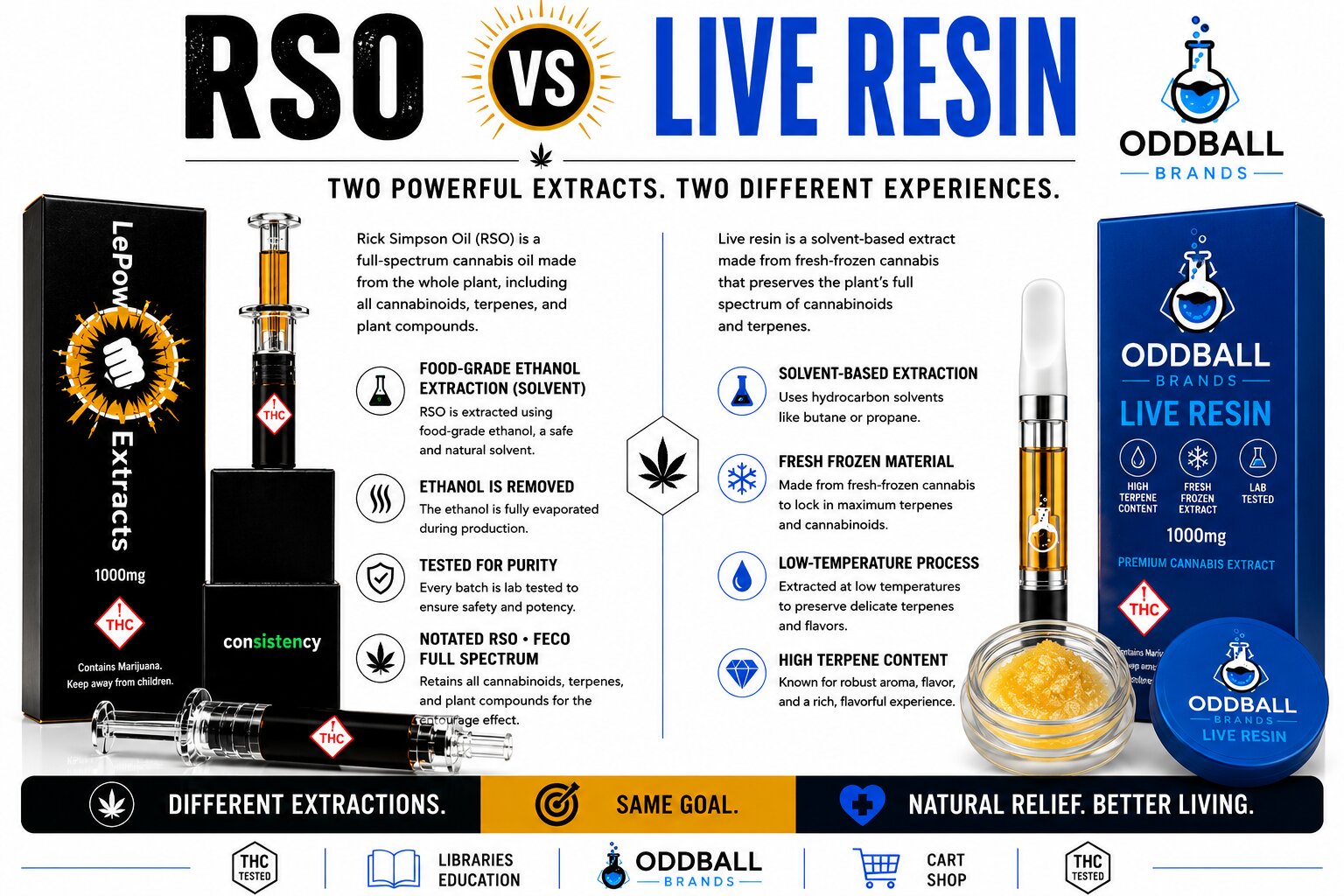
RSO begins with whole-plant cannabis and is extracted to preserve many of the naturally occurring compounds found within the plant. After extraction, the oil is carefully refined to remove unwanted plant materials while preserving the characteristics that make whole-plant cannabis extracts unique.
Rather than focusing on isolating cannabinoids, RSO is manufactured to preserve much of the cannabis plant’s naturally occurring profile through a whole-plant extraction approach.
The finished product is a thick, dark cannabis oil commonly dispensed from a syringe and intended for oral use or incorporation into infused products.
How Distillate Is Made
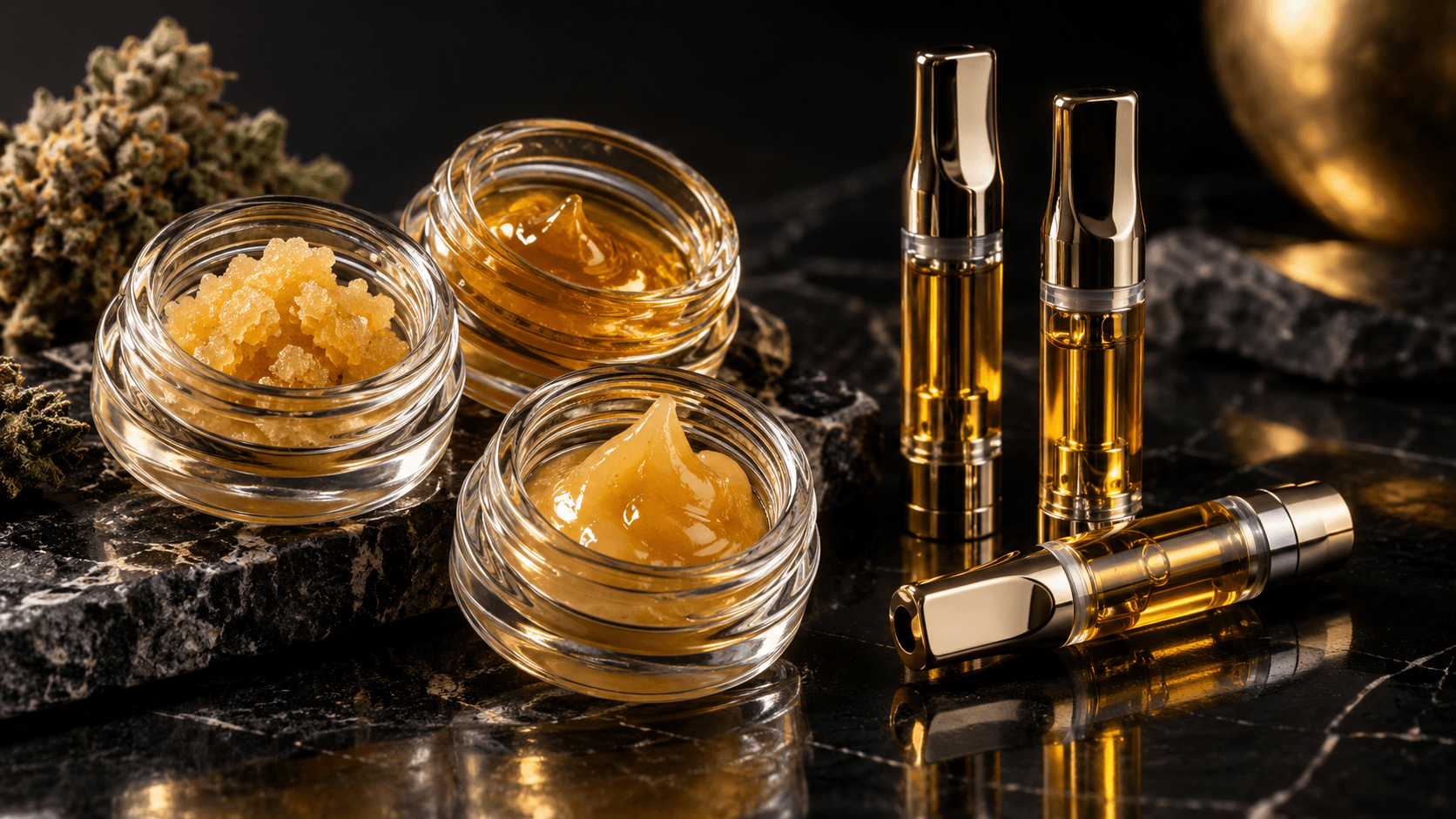
Distillate follows a different manufacturing philosophy. Instead of preserving the plant’s complete profile, the oil undergoes additional refinement to isolate cannabinoids into a highly purified concentrate.
The finished product is valued for its consistency, high cannabinoid concentration, and versatility. Because of these characteristics, distillate is commonly used in vape cartridges, disposable vaporizers, infused pre-rolls, gummies, chocolates, beverages, tinctures, capsules, and many other infused cannabis products.
Although both products originate from cannabis, they are manufactured with different objectives. One focuses on preserving the plant’s natural complexity, while the other focuses on producing a refined cannabinoid concentrate.
RSO vs. Distillate Comparison
| Feature | RSO | Distillate |
| Manufacturing Goal | Preserve the whole-plant profile | Isolate cannabinoids |
| Cannabinoid Profile | Broad spectrum of naturally occurring compounds | Primarily isolated cannabinoids |
| Terpenes | Naturally occurring profile retained to a greater extent | Often refined out and may be reintroduced depending on the finished product |
| Appearance | Thick, deep amber to reddish-brown oil | Clear to golden refined oil |
| Consistency | Thick and viscous | Smooth and highly refined |
| Common Uses | Oral use, capsules, infused products | Vape cartridges, edibles, tinctures, infused products |
| Manufacturing Philosophy | Preserve the natural complexity of the cannabis plant | Produce a clean, consistent cannabinoid concentrate |
Which Product Is Right for You?
There isn’t a universal “better” choice between RSO and distillate. The right product depends on your personal preferences and the type of cannabis extract you’re looking for.
Many consumers choose RSO because they prefer a whole-plant extract that preserves many of the naturally occurring compounds found in cannabis.
Others choose distillate because they prefer a highly refined concentrate commonly used in vape products, edibles, tinctures, and other infused products.
Rather than focusing only on THC percentage, consider asking yourself:
- What type of cannabis extract am I looking for?
- Do I prefer a whole-plant extract or a highly refined concentrate?
- How do I plan to use the product?
- Do I understand how this product was manufactured?
Understanding these differences can help you choose the cannabis extract that best aligns with your individual preferences.
What Should High-Quality RSO Look Like?
Not all RSO is manufactured the same way. The quality of the starting material, extraction method, refinement process, and quality-control standards all influence the finished product.
When evaluating an RSO product, here are several characteristics to consider.
Whole-Plant Cannabis
A quality RSO begins with whole-plant cannabis and is manufactured to preserve many of the naturally occurring compounds that make the plant unique.
Proper Refinement
A properly manufactured RSO should be carefully refined to remove unwanted waxes, fats, lipids, and other unwanted plant materials while preserving the characteristics of a whole-plant extract.
Clean Appearance
A properly manufactured RSO often has a clean, translucent deep amber to reddish-brown appearance when viewed through the syringe or glass container. It should appear smooth and consistent rather than cloudy, gritty, or excessively clumpy.
Smooth Consistency
RSO is naturally thick, but it should dispense smoothly from the syringe. If the oil becomes cool, gently warming the syringe in your hand or placing it in a sealed bag in warm (not boiling) water for a few minutes can make dispensing easier.
Laboratory Tested
Every batch should be tested by a licensed laboratory for potency and compliance with state safety requirements before reaching dispensary shelves.
Manufacturer Transparency
A reputable manufacturer should be willing to explain its quality standards and manufacturing philosophy so consumers understand what they’re purchasing.
The more you understand about how RSO is produced, the easier it becomes to recognize quality and ask informed questions when choosing a product.
Why Lepow Extracts Produces Whole-Plant RSO
At Lepow Extracts, we believe consumers deserve more than quality cannabis products—they deserve clear, honest, and accurate information about what they’re purchasing.
That’s why we believe education is just as important as manufacturing.
Our approach to RSO begins with a simple philosophy: preserve the natural character of the cannabis plant while producing a clean, consistent whole-plant extract through careful refinement and strict quality standards.
We believe understanding how cannabis extracts are made is just as important as understanding how they are used. When consumers understand the differences between products like RSO and distillate, they can make informed decisions based on their own preferences rather than marketing claims or THC percentage alone.
Whether you purchase from Kind Meds, another licensed dispensary, or are simply looking to learn more about cannabis extracts, our goal remains the same:
Help people better understand cannabis.
Because an informed consumer is an empowered consumer.
Key Takeaways
- RSO and distillate are two different cannabis extracts designed for different purposes.
- RSO is a whole-plant extract intended to preserve many naturally occurring compounds found in cannabis.
- Distillate is a highly refined cannabinoid concentrate designed for consistency and versatility.
- The manufacturing process plays an important role in the characteristics of the finished product.
- Understanding extraction methods helps consumers make informed purchasing decisions.
- Quality begins with responsible manufacturing, careful refinement, laboratory testing, and a commitment to transparency.
Final Thoughts
- Choosing between RSO and distillate isn’t about deciding which product is “better.” It’s about understanding how each extract is made and selecting the one that best aligns with your personal preferences and intended use.
- The more you understand about cannabis extracts, the more confident you’ll become when evaluating products, asking informed questions, and choosing cannabis products that fit your individual needs.
- At Kind Meds and Lepow Extracts, we believe education should always come before sales. Whether you purchase from us or another licensed dispensary, we hope this guide has helped you better understand the differences between RSO and distillate and what to look for in a quality cannabis extract.
- Because better knowledge leads to better decisions.
No. RSO is a whole-plant cannabis extract designed to preserve many of the naturally occurring cannabinoids, terpenes, flavonoids, and other beneficial plant compounds. Distillate is a highly refined cannabinoid concentrate created through a different manufacturing process.
Not necessarily. Distillate often contains a higher percentage of THC, while RSO preserves a broader range of naturally occurring cannabis compounds. They are manufactured with different goals and offer different characteristics.
RSO typically has a deep amber to reddish-brown appearance because it retains more of the cannabis plant's naturally occurring compounds. Distillate undergoes additional refinement, resulting in a lighter-colored concentrate.
Distillate is commonly found in vape cartridges, disposable vaporizers, gummies, chocolates, beverages, tinctures, capsules, infused pre-rolls, and many other infused cannabis products.
Look for a whole-plant extract that has been carefully refined, laboratory tested, and manufactured with attention to quality. A properly manufactured RSO should appear clean, consistent, and dispense smoothly from the syringe.
No. THC percentage is only one part of the equation. The extraction method, refinement process, cannabinoid profile, and overall manufacturing quality all contribute to the characteristics of the finished product.
RSO is commonly described as a whole-plant, full-spectrum extract because it is manufactured to preserve many of the naturally occurring compounds found in cannabis.
Some consumers prefer a whole-plant extract that preserves a broader range of naturally occurring cannabis compounds, while others prefer the consistency and versatility of distillate. The right choice depends on individual preferences and intended use.
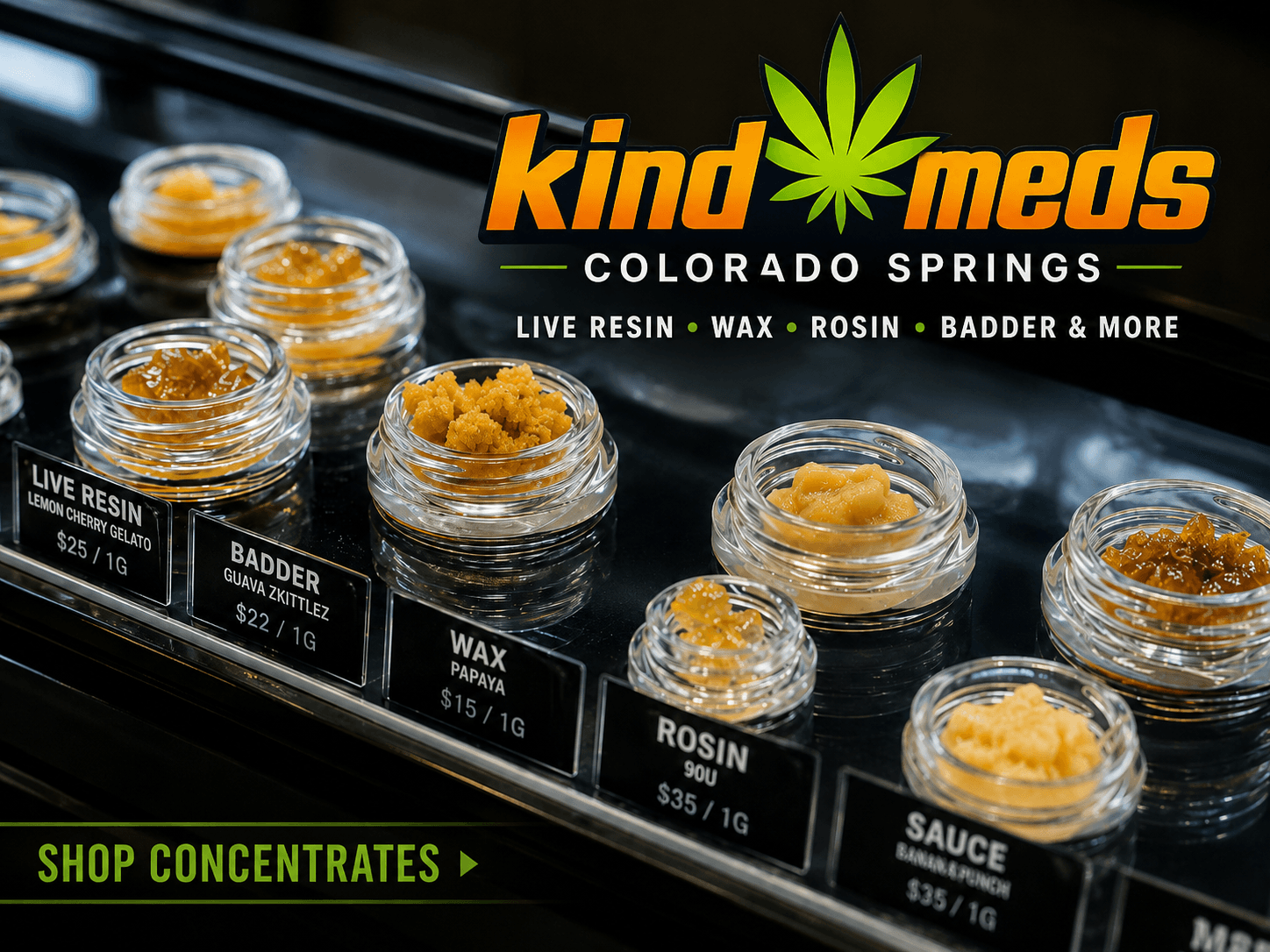
Visit the Kind Meds Denver dispensary for location information, current hours, and access to the live Denver menu.